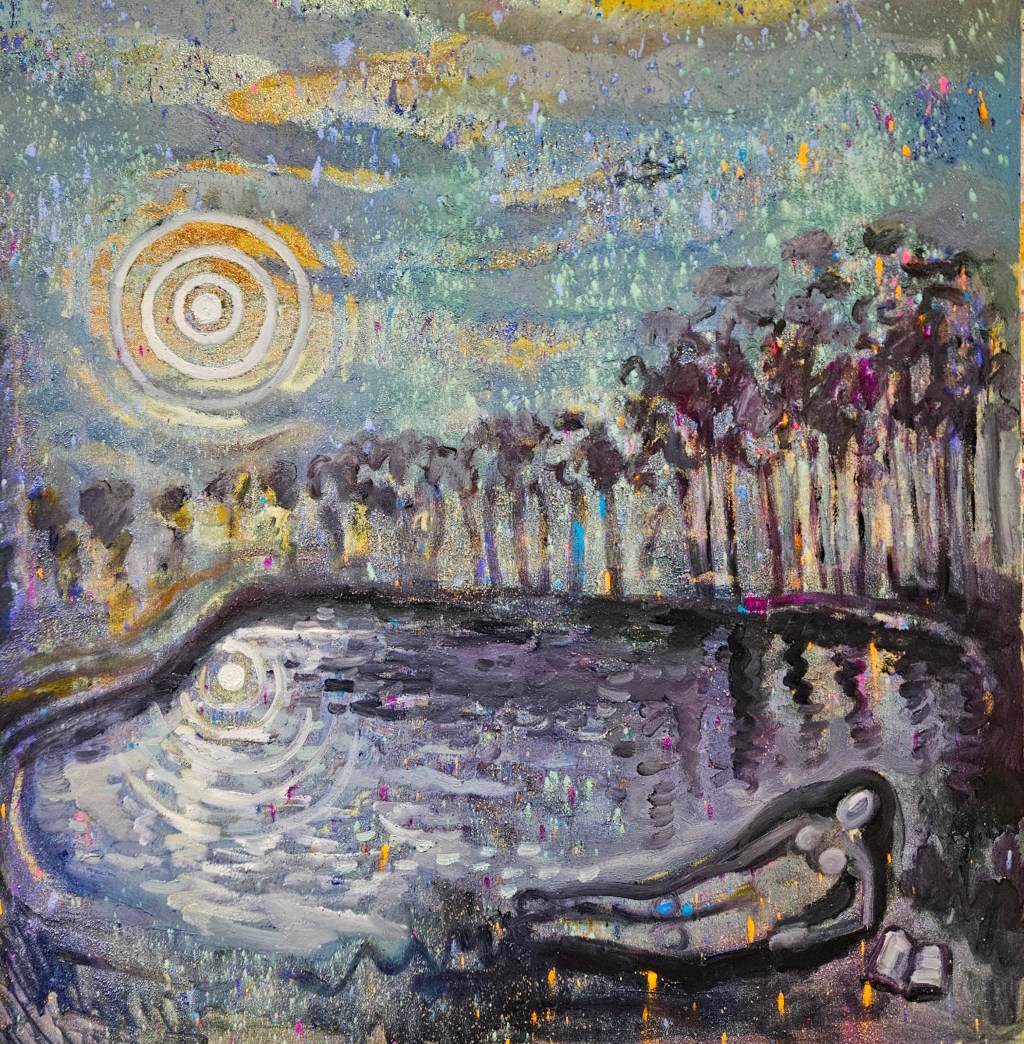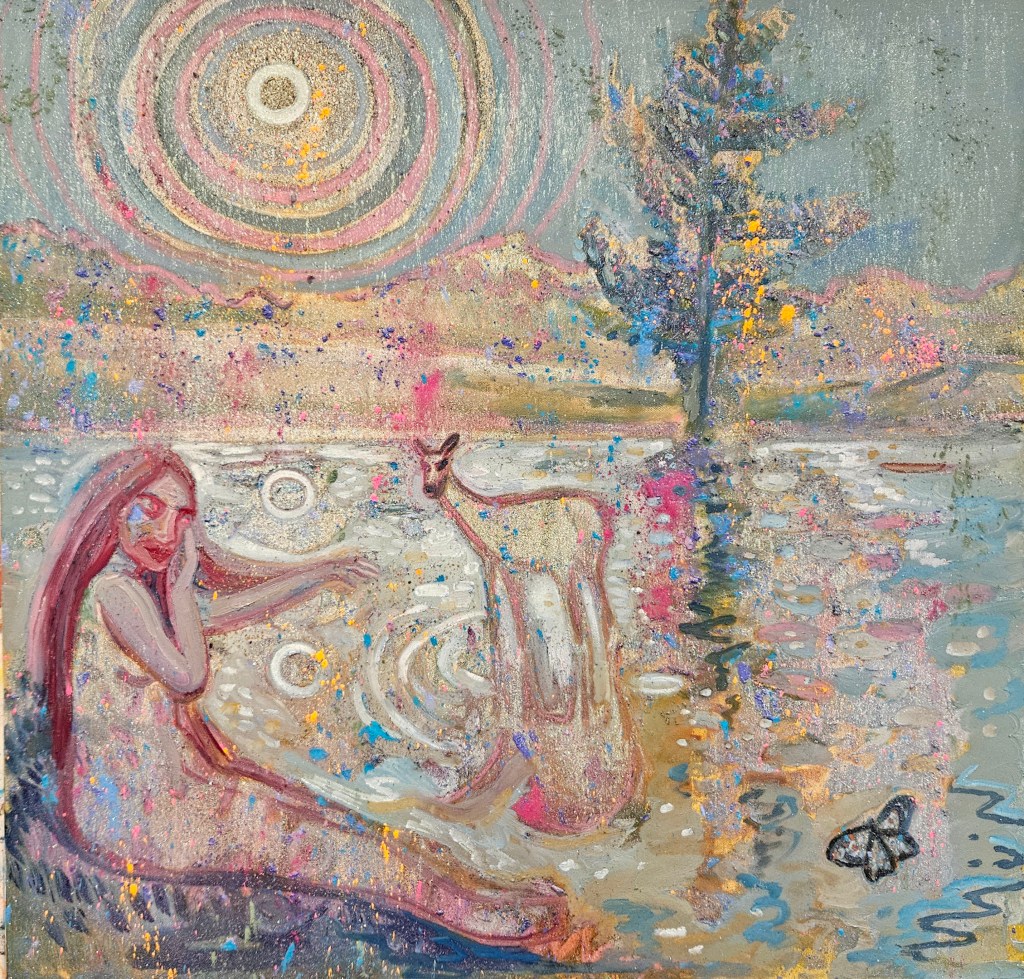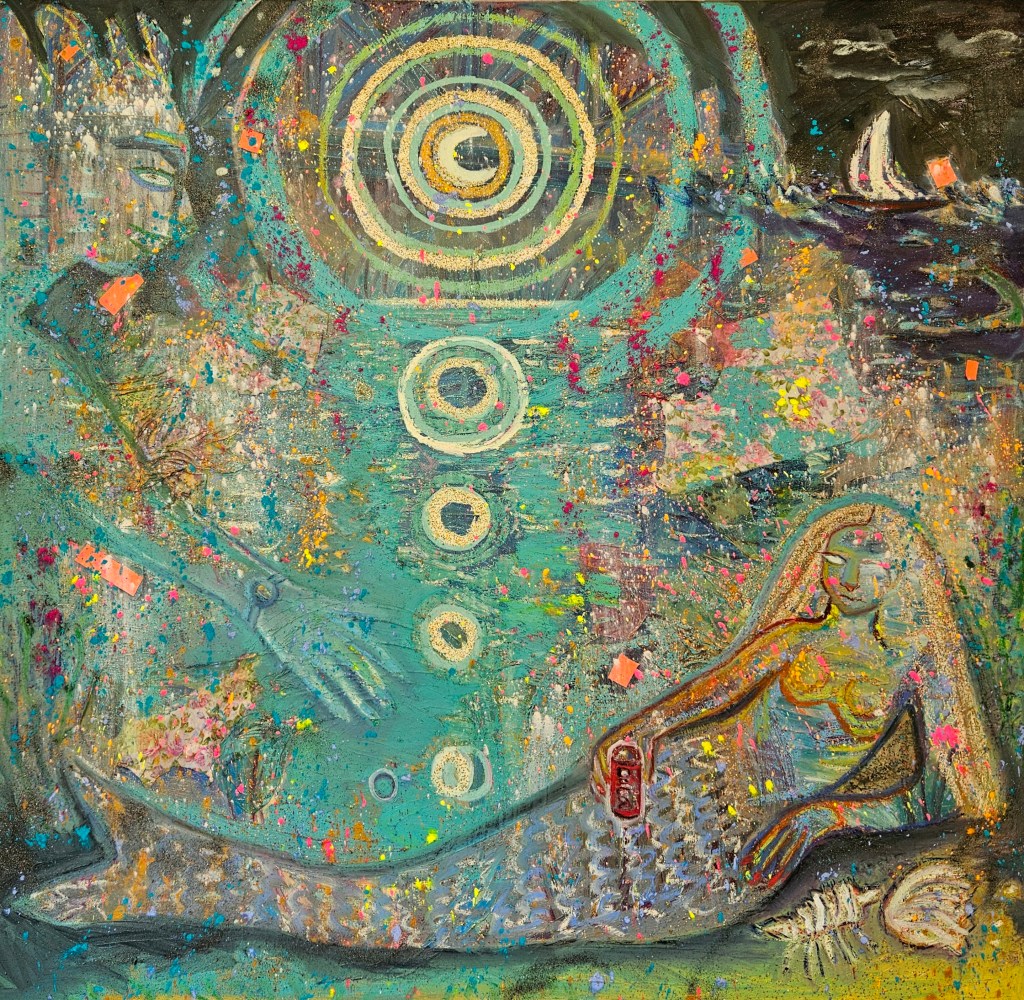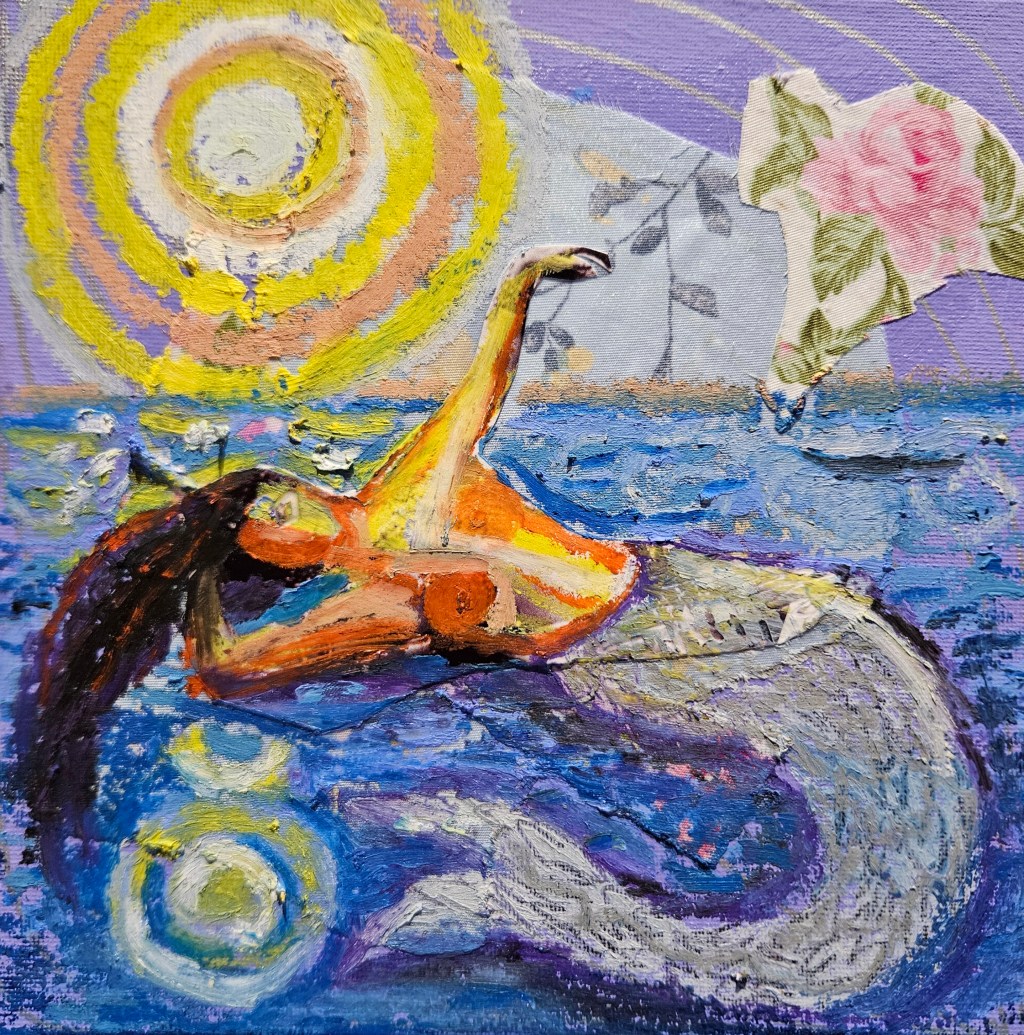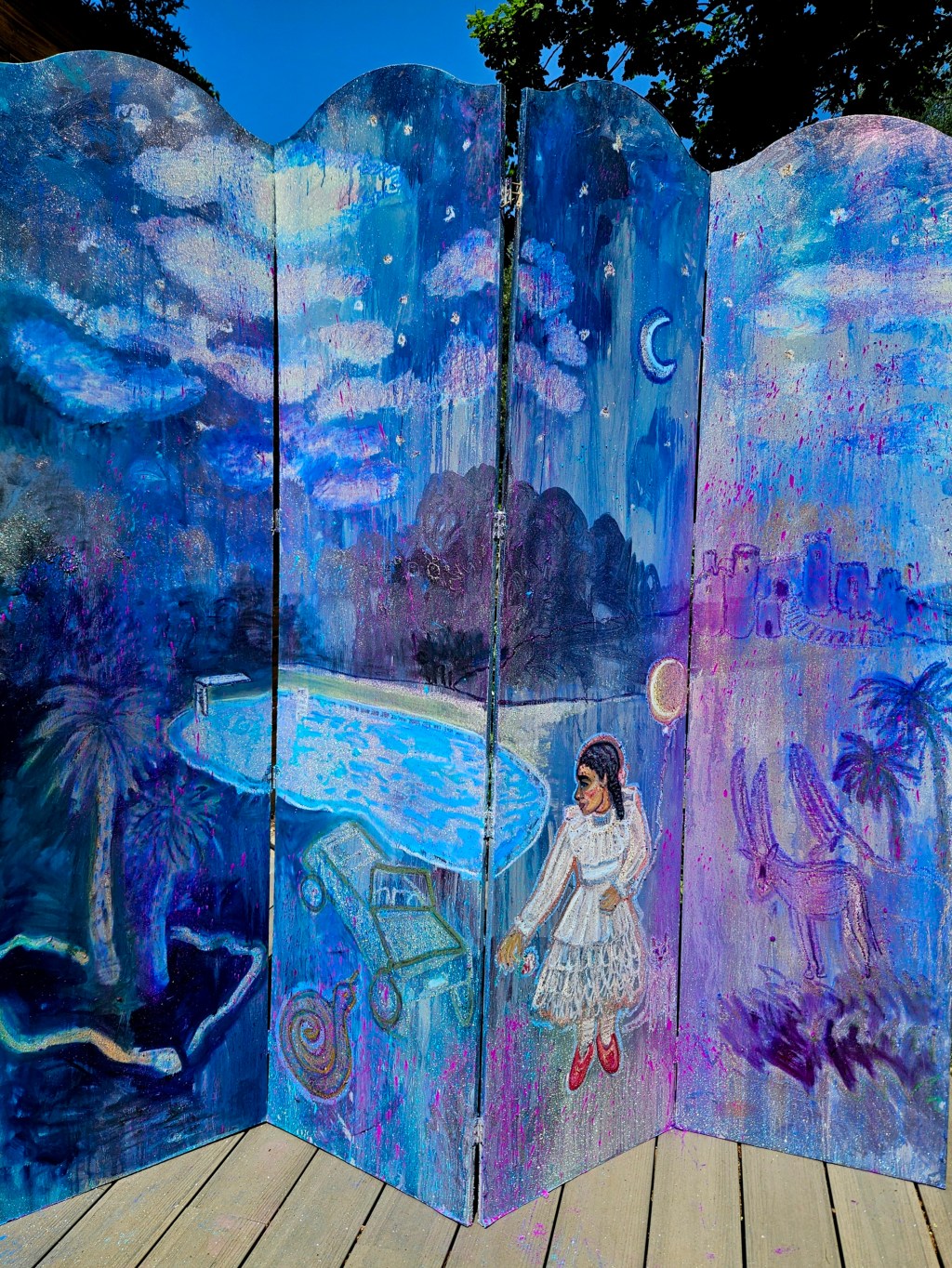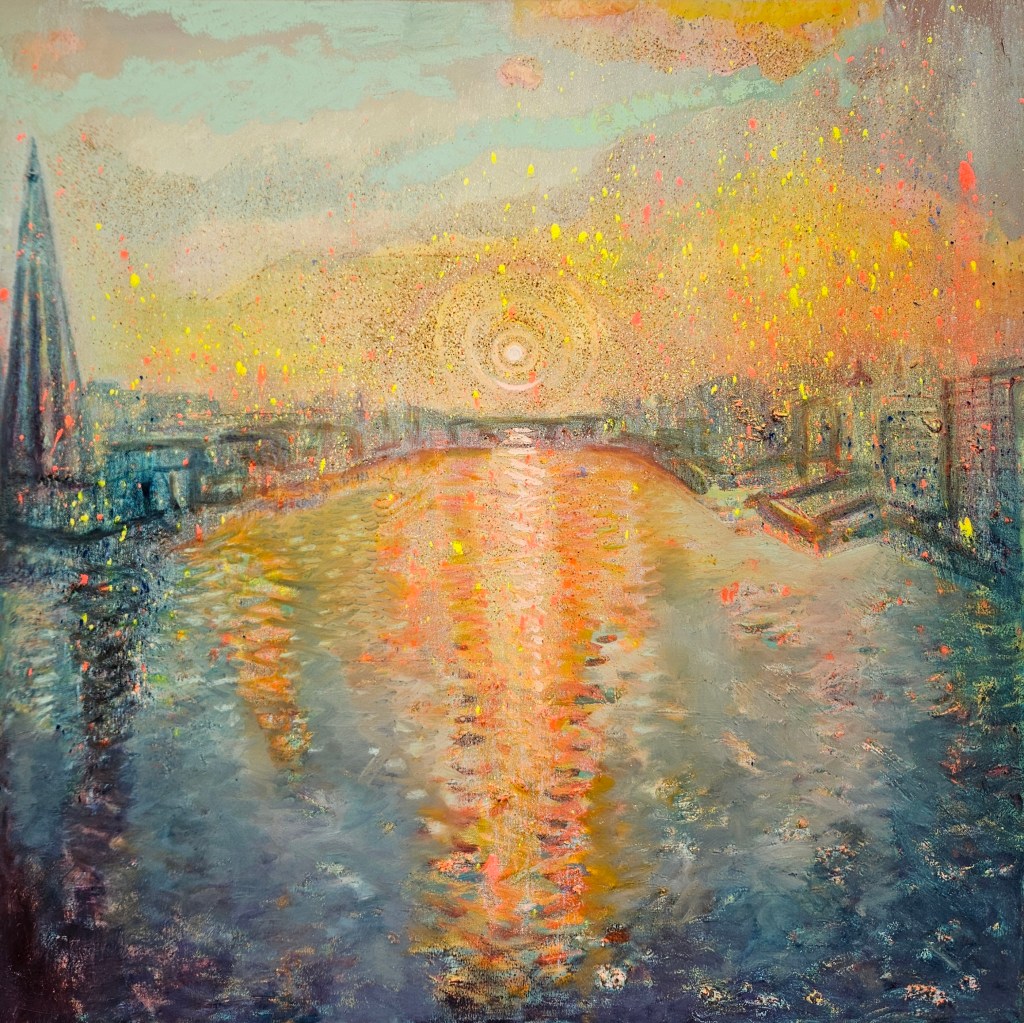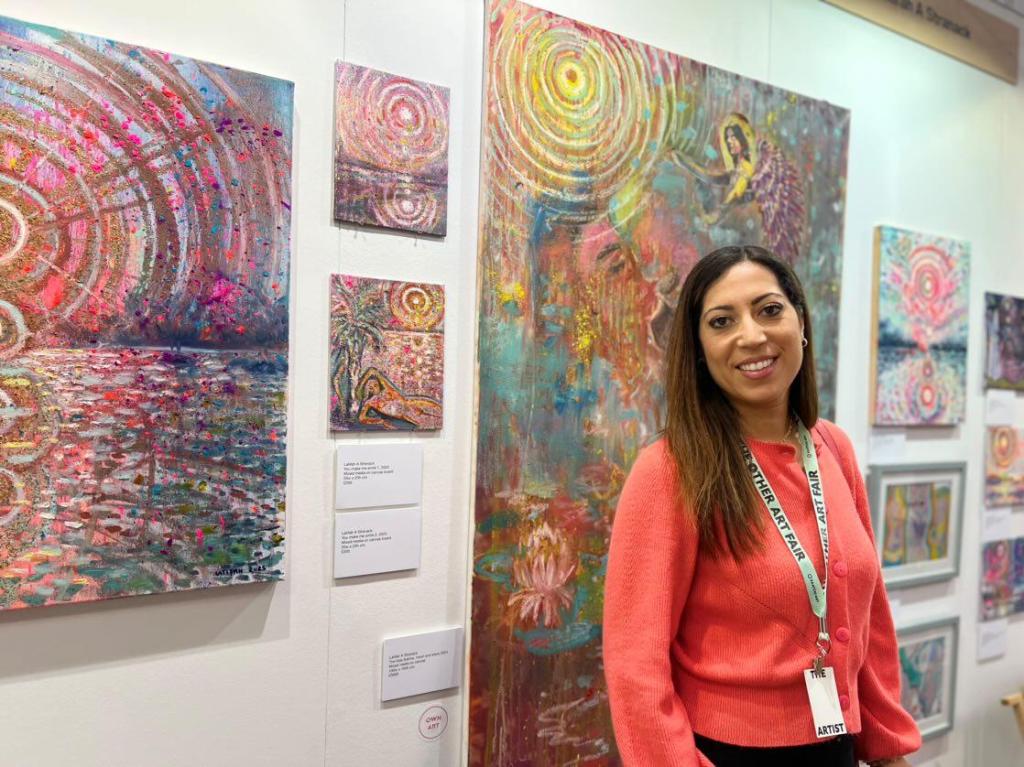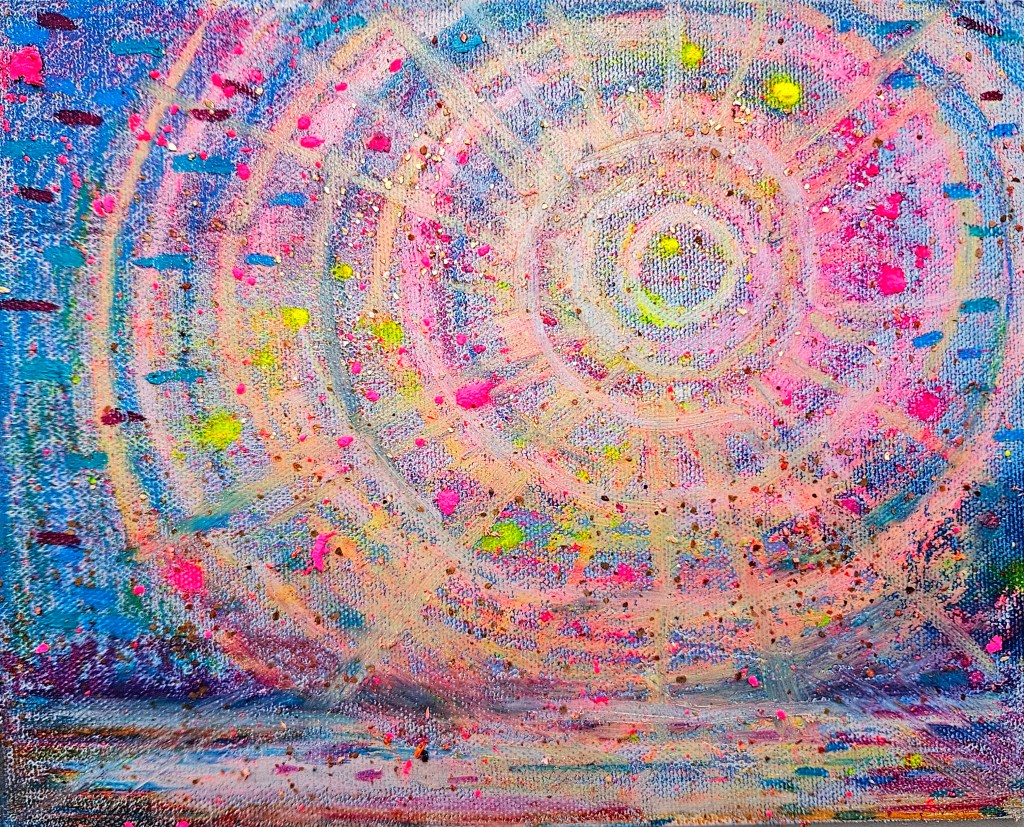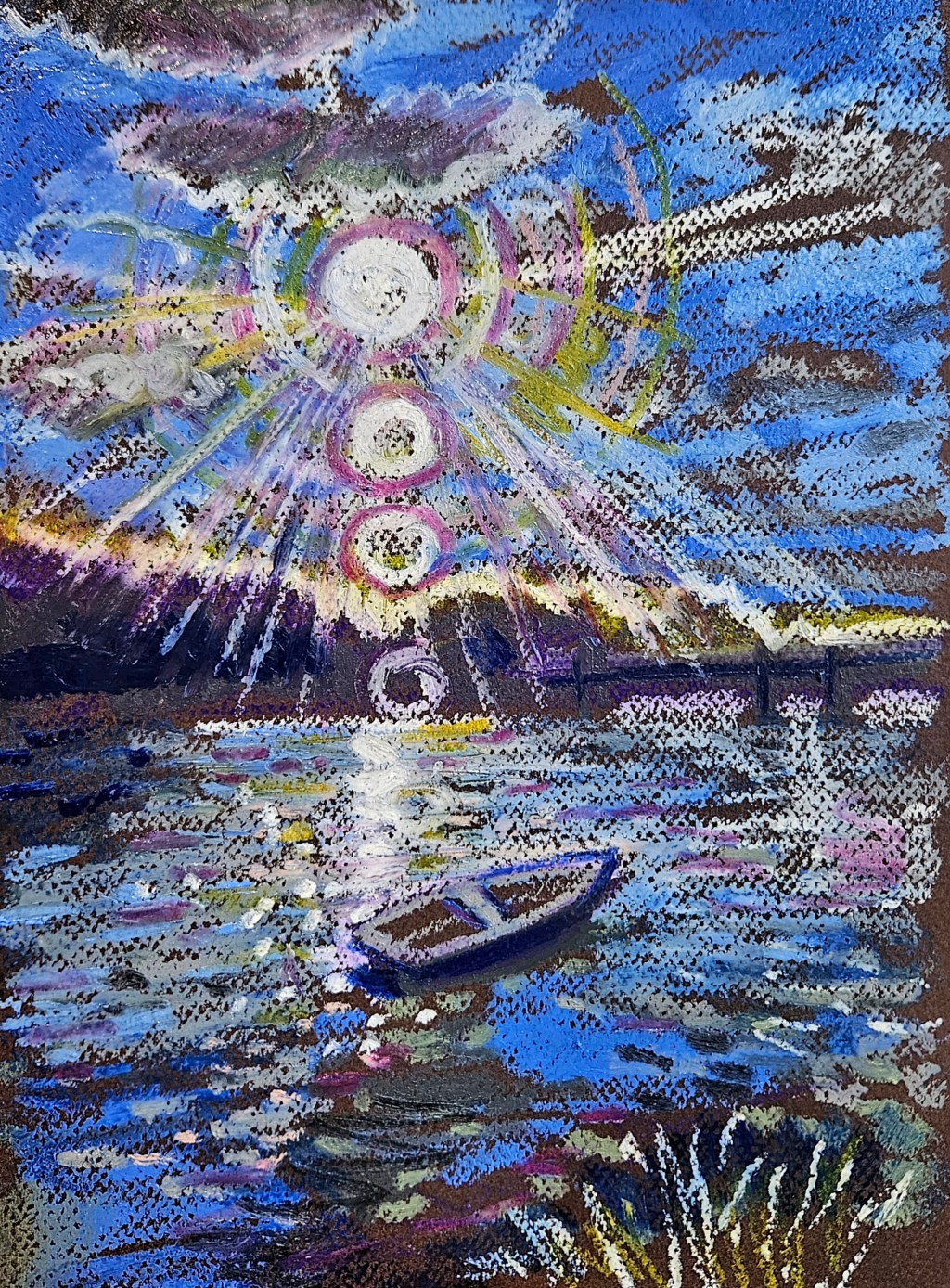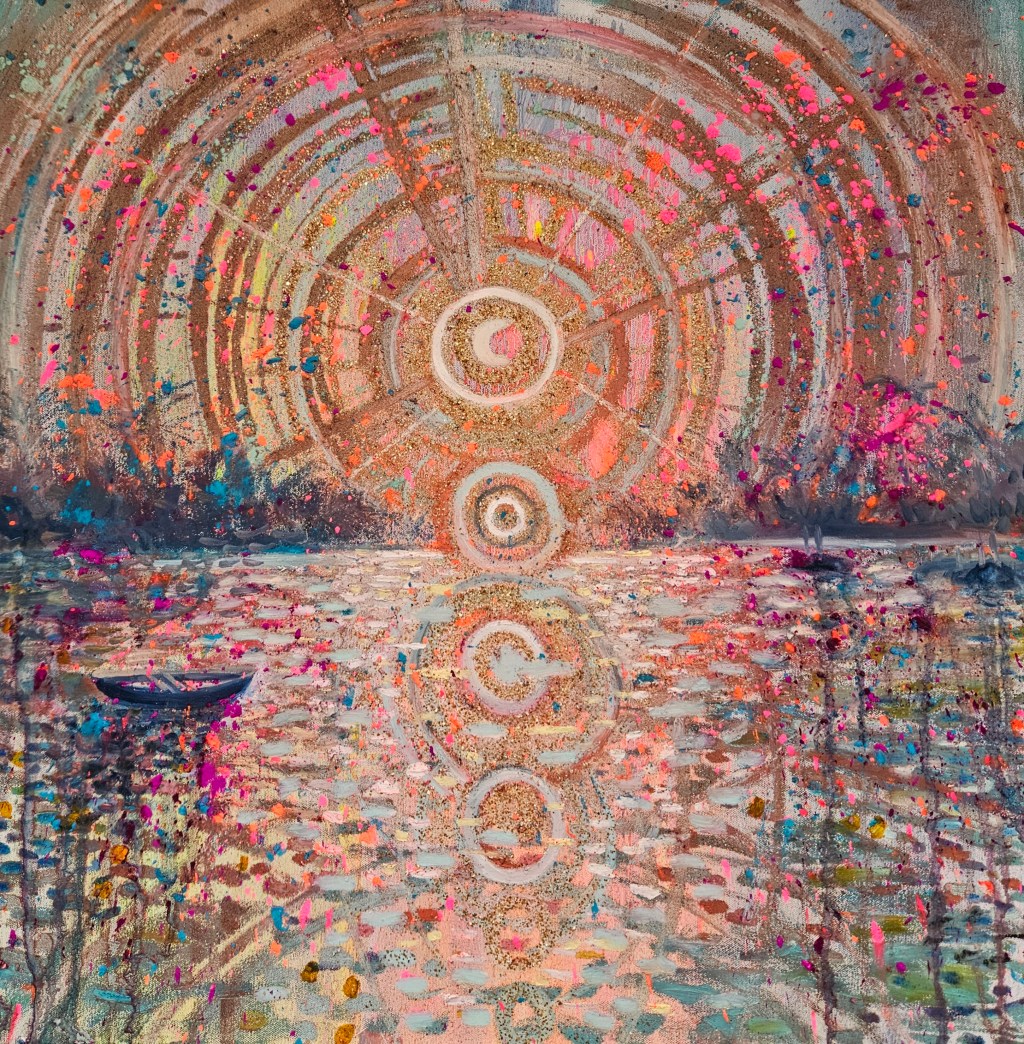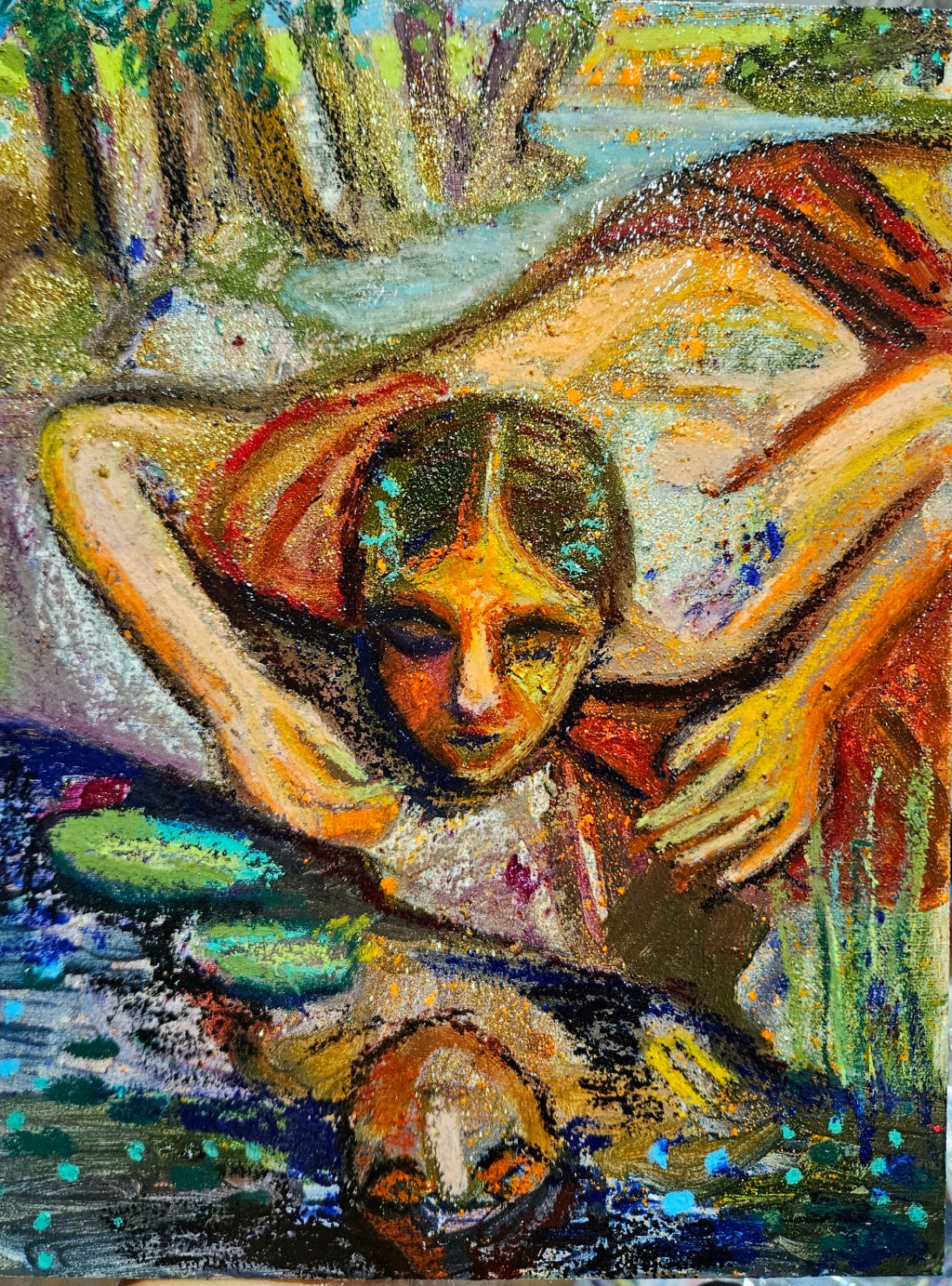
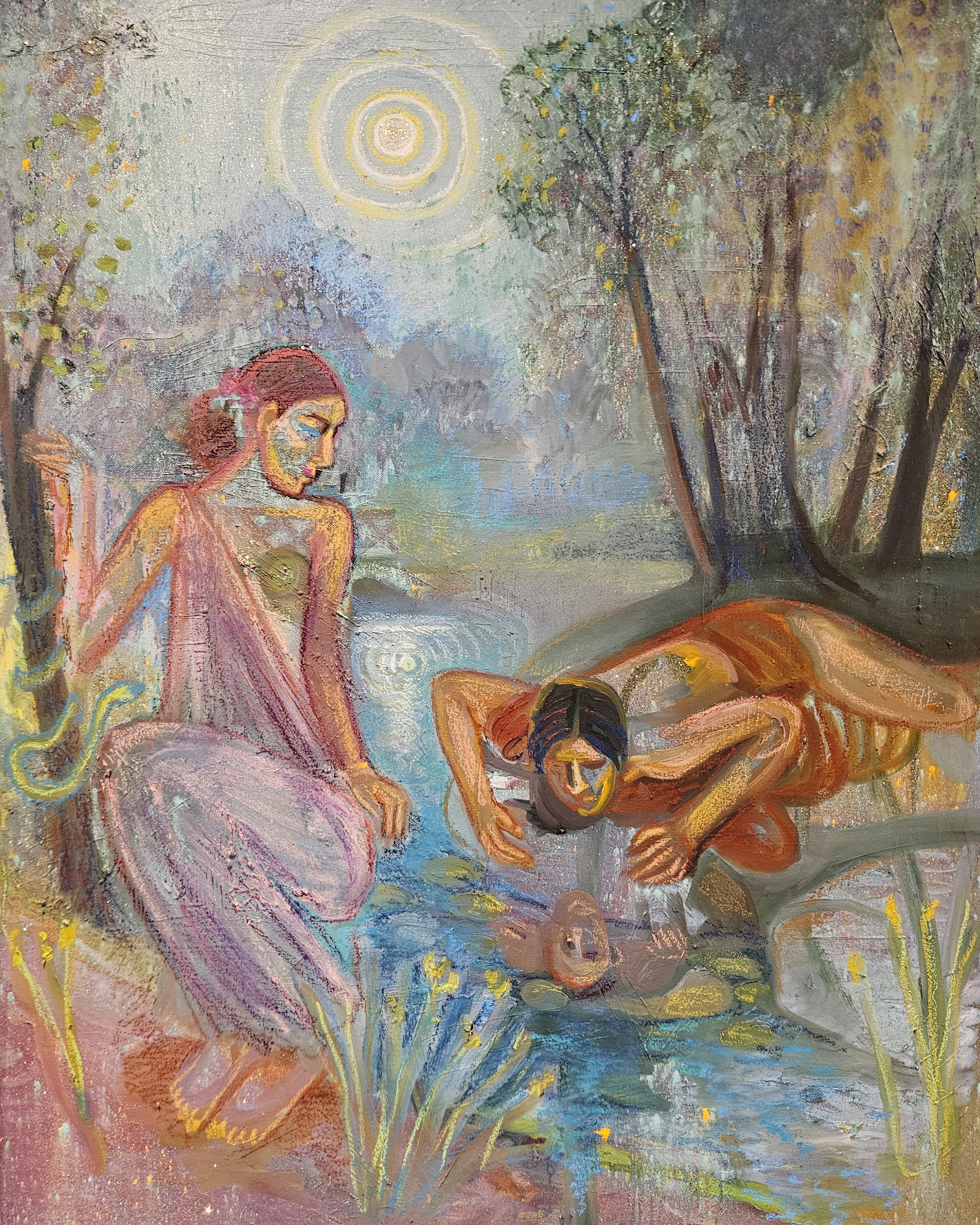
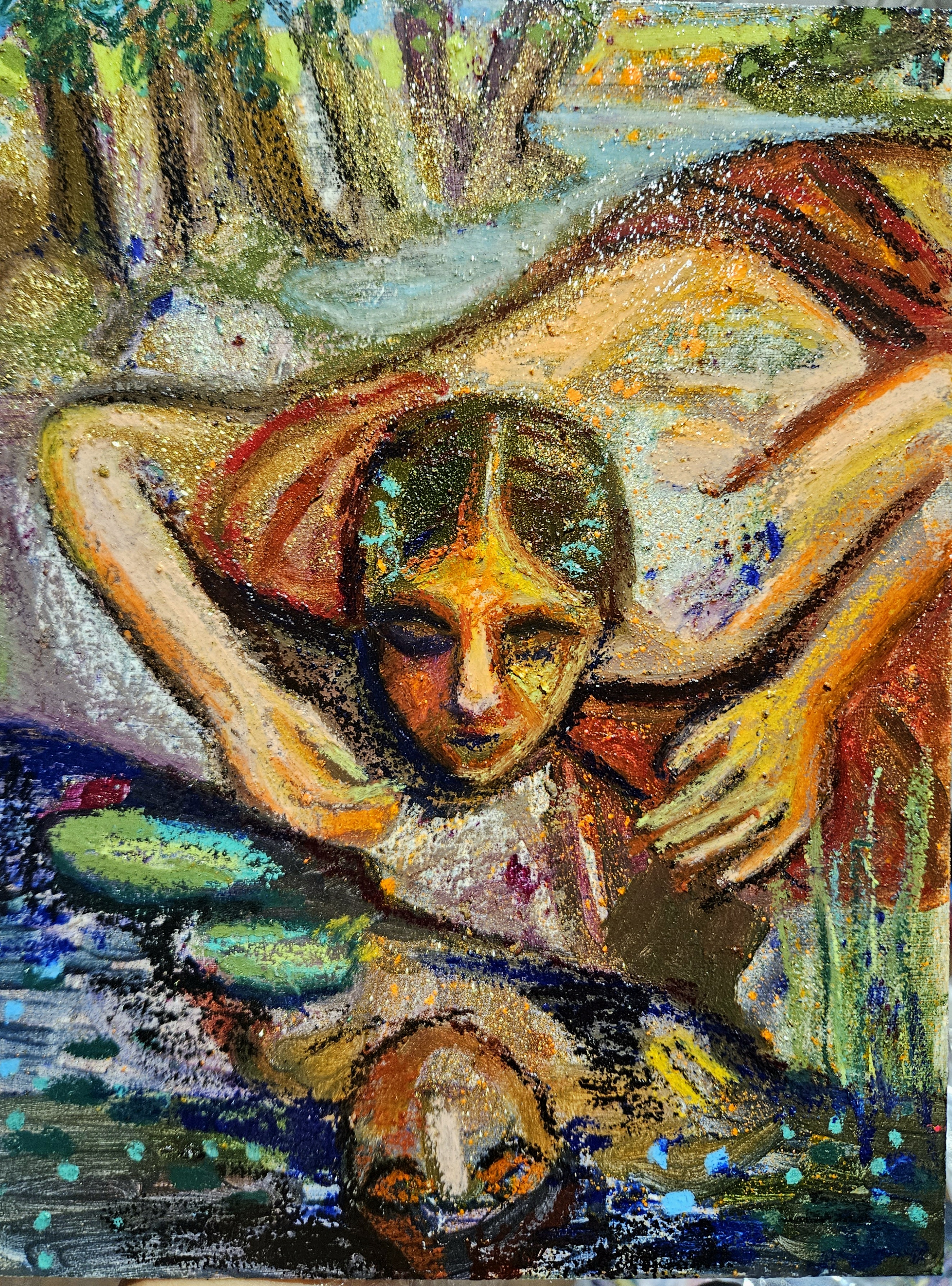
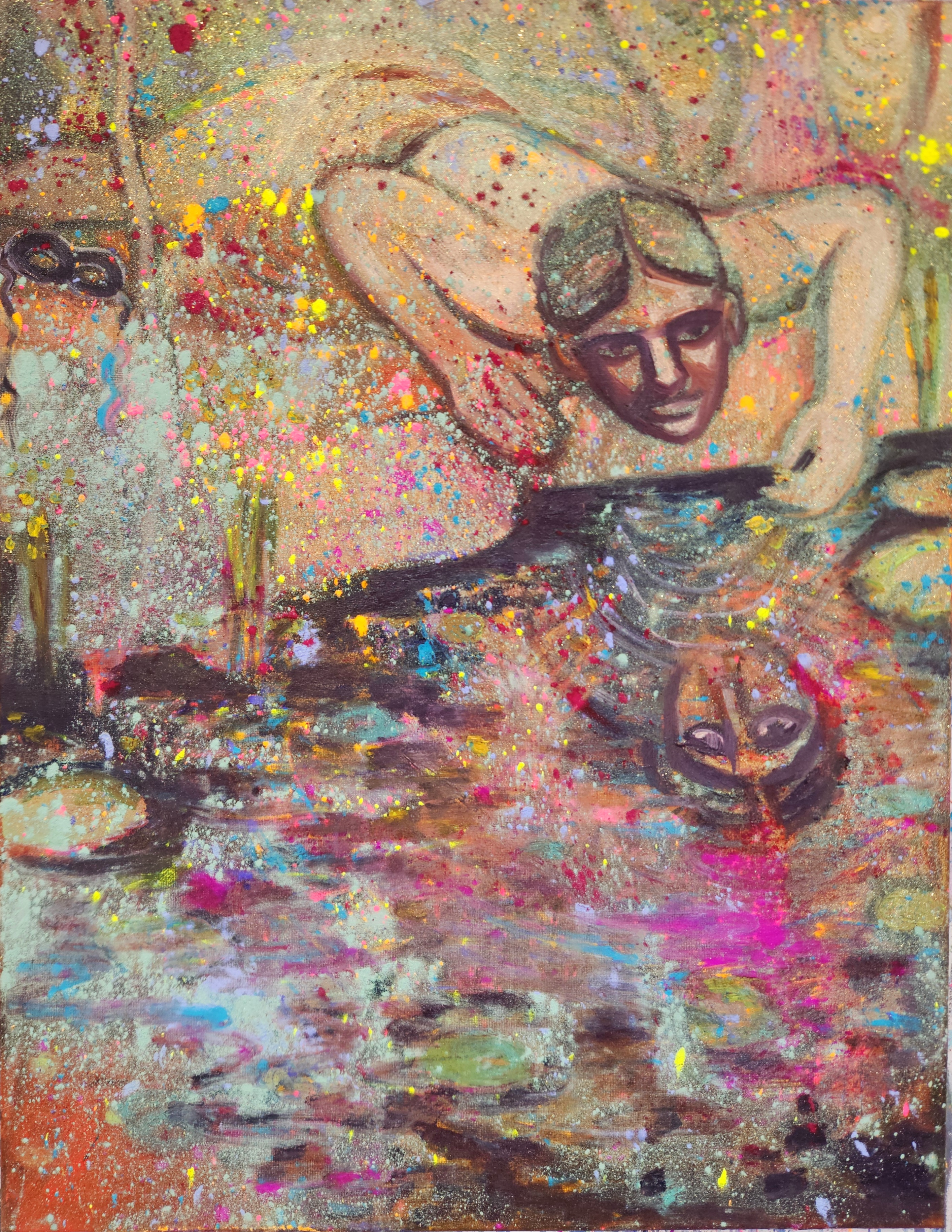
Recently, I’ve become entranced by the age-old image of Narcissus—forever lost in the depths of his own gaze, a motif that has haunted artists from Caravaggio to contemporary creators. At the Barbican, the shimmering water feature whispered possibilities: what if Narcissus’s myth unfolded here, amid concrete and glass, a modern relic among ancient echoes? I find myself circling his story, wondering if I am the Narcissus or the ghostly Echo, doomed to reflect and repeat, haunted by his mythic allure.
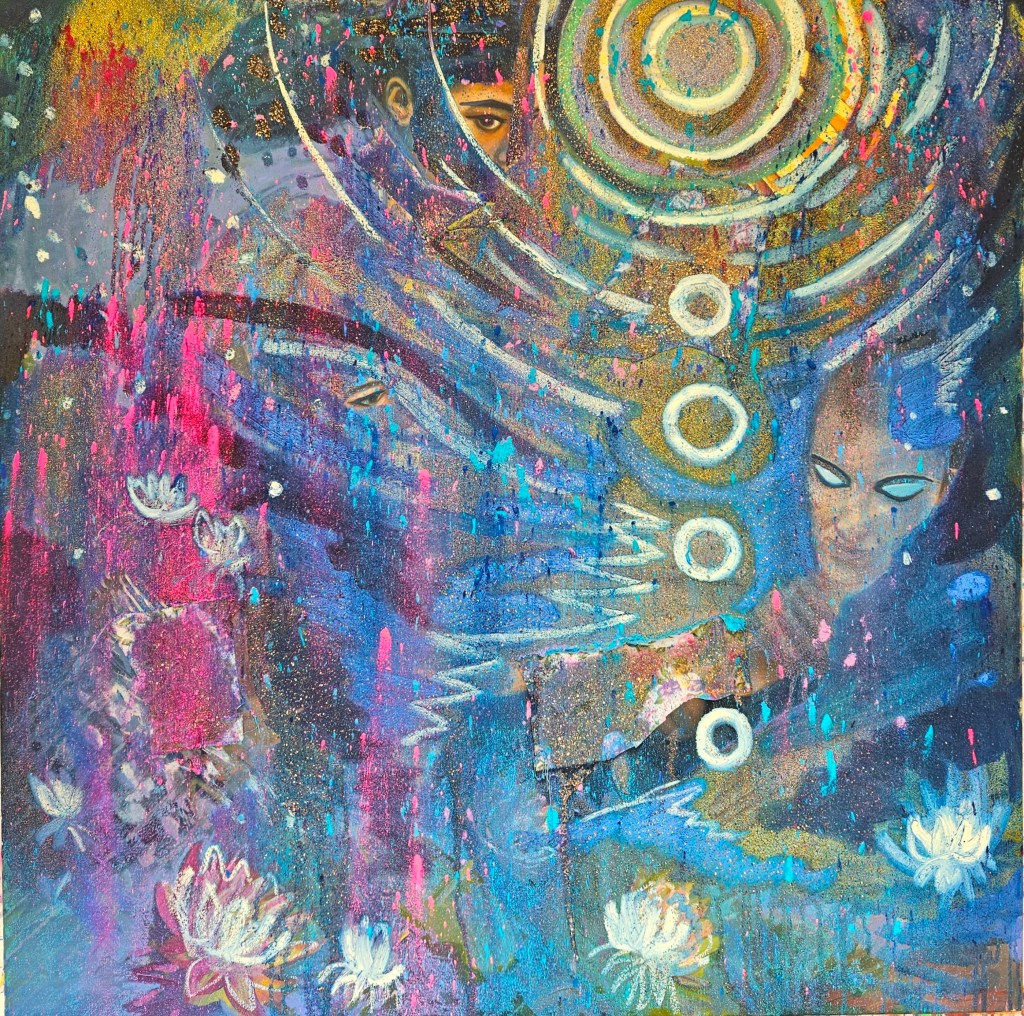
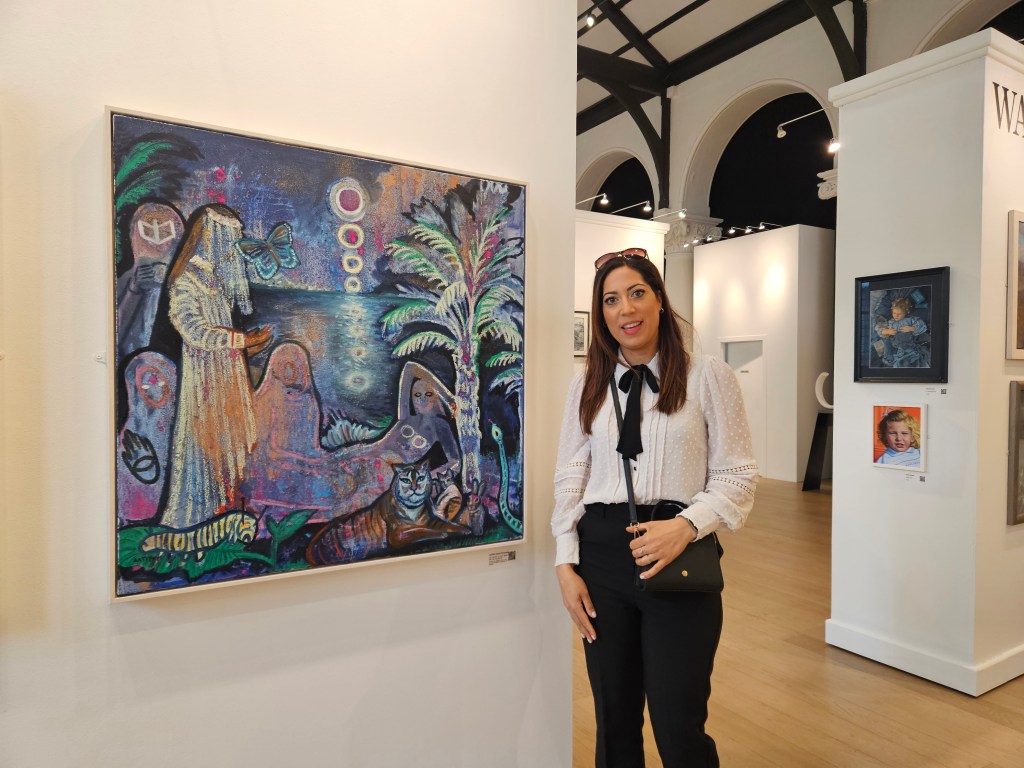
The story of Narcissus continues to captivate me, but I’m intent on weaving my own narrative into its mythic tapestry. I recall a distant memory—a blurred, unsettling ache, the sting of being kept at arm’s length. The mask I painted in the corner, an uncanny presence I encounter again and again—has become a personal symbol. Like the Venetian masks of Carnevale, it speaks to the performance of identity, concealment, and the roles we play in our own stories of desire and loss.
Working with oil paint, experimenting across brush sizes and dustings of loose pigment, I aim to channel the alchemy of classical painting—inviting serendipitous moments, subtle textures, and flashes of detail reminiscent of the layered surfaces in Renaissance panel works. Each mark becomes a dialogue with history and my own reflection.
The myth of Echo and Narcissus is one of art history’s richest allegories, told and retold from Ovid’s Metamorphoses to Pre-Raphaelite paintings and beyond. Echo,the nymph condemned to repeat the words of others—becomes the disembodied voice of longing, while Narcissus, punished for his pride, dissolves into his own image, immortalised as both flower and cautionary tale. These archetypes echo through the ages, their tragedy mirrored in paint, marble, and every artist’s search for meaning in reflection.